New View on an Ancient Teaching
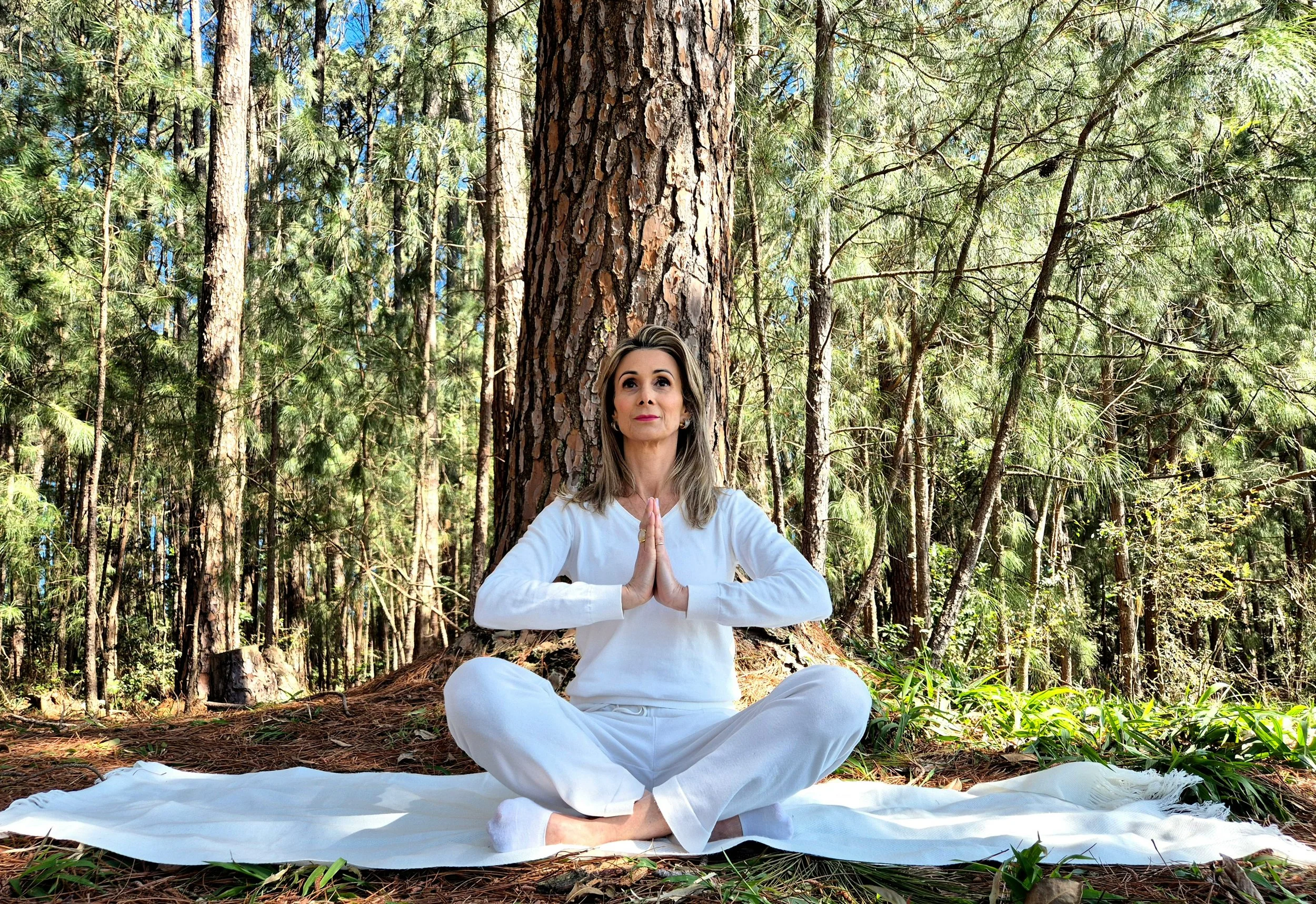
At 8:30 on Saturday mornings, bleary-eyed or over caffeinated, the students roll out their mats for Foundational Flow, a beginner level flow class I’ve been teaching since June.
You can’t ever really start teaching from the beginning in an ongoing yoga class. There’s always somebody there who’s practiced forever but comes because the time works for them. Someone else has taken 6 classes and the woman in the back is there for the first time. Every class has to be spacious enough to welcome brand new practitioners while feeding the seasoned yogis.
So we’ve worked with foundations and hugging the midline. We’ve looked at the shoulders, hands, and core. We’ve learned about triangle pose. Tried a modified vasithsasana. We’ve flowed through variations of Surya Namaskar A and B. They’ve sweat. And… I got them to laugh with me last week. No small task in a studio where everyone takes yoga very seriously. So, progress.
Most importantly, though I’m teaching them yoga philosophy. In my opinion, without the philosophy a yoga class is just stretching. But with it, we glimpse a thousands of years old system for transformation. That’s what we’re all there for (even if they don’t know it yet)
We started with some simple ideas: breath as prana, the definition of yoga. Now we’re into the yamas and niyamas from Patanjali’s Yoga Sutras. I’ve taught these a thousand times. I feel I have a general understanding of them. I practice them on and off the mat. They’re not exactly new news to me. So imagine my surprise two weeks ago when one of them transformed my view in realtime as I was teaching.
Teachings on Self-Study
The teaching was on svadhyaya. It’s a niyama, which is a personal or inner observance. Svadhyaya is most often translated to mean self-study. Most students then take that to mean that yoga invites us to take a look at ourselves. To study ourselves and know ourselves deeply. Folks journal and go to therapy. They try to get to the bottom of who they are and how they got to be that way.
It is also often understood to mean Self study, the study of the capital S Self. There’s something about yoga that says it’s important to learn more about this Self that we all share. It’s so important that it’s listed as one of the inner observances to practice if one is committed to a life of yoga. Folks meditate and read descriptions of the esoteric Self.
Both of these are pretty common understandings of svadhyaya. Both are useful and worth the exploration.
A New View
What came to me as I taught last weekend adds to these two considerations. It’s this:
Yoga is a self-study endeavor.
I know I’m not the first to say it, but for some reason, this time it felt important for me to recognize that modern yoga in the West tends to be a self-study practice.
If we were in India, particularly in the formative years of yoga, we would likely learn yoga from an esteemed teacher. That person would care for all levels of our development. They could be our only teacher for our entire lives. And they would work to help us transform into true yogis/yoginis.
But here in the West, yoga doesn’t work that way. We’ve had too many false gurus try to sell us snake oil for most of us to feel comfortable surrendering to a single teacher.
For most of us in the West, we’re pulling from a lot of different sources. We practice with Jennifer on Monday, Thomas on Tuesday, at home on Thursday. Then we meditate with Shoshana every Saturday. We drop in on weekend workshops and retreats when we can. Our practice becomes an amalgam of styles and practices. We’re each in charge of signing up for classes and workshops. Essentially we design our curriculums by how we decide to practice.
Even if you study with a singular teacher for many years (as I did for a decade) you’re still the one responsible for your practice. The single teacher tends to offer a class, workshop or training, then step back and let you make of it what you will. You’re still the one who has to roll out the mat, show up, study the texts and walk off the mat to live your yoga as best you can (even when you’d rather zone out on social media).
Mixed Blessing
I think yoga as self-study is a mixed blessing. On the one hand you are completely free to pursue the yoga that inspires and challenges you. You are empowered to take your practice as far as you want it to go. You get to seek out teachers who support you along the way. And ultimately to claim your practice as your own.
On the other hand without guidance from experienced teachers it’s easy to stay stuck. It’s possible to never move beyond the (truly wonderful) physical form of yoga into the transformative. And if no one’s holding your feet to the fire, you’ll shrink back when things get hard. Or, if it’s your style to over do it, you’ll burn your feet in that same fire and take your practice with it. Either way you’re left just short of what’s truly possible with a life dedicated to yoga.
In Your Hands
What yoga as self-study means to me most of all is that it’s all in your hands. And that’s what’s most important to recognize. No one is coming with a curriculum specifically written out for the rest of your life of practice. It’s up to you to ask your questions and follow the answers until they provoke new questions. It’s up to you to explore, get curious, and play around. It’s all yours. Go with it!
Yoga is the ultimate self-study course. If you stick with it, you’ll learn about yourself and the Self. And you’ll learn to let yoga take you as far as it can take you. When you think you’ve gotten there, I invite you to look around and ask again: “what’s next?”
Yoga will always have an answer.
And so, if you find you’re wanting a bit more direction in your self-guided study of yoga, I’d love to support you. I offer mentorships for yoga teachers and 1:1 guidance for yoga students. Wherever you are in your explorations I’m happy to help you ask questions and design the yoga curriculum that’s exactly right for your life right now. Connect HERE to learn more.